
Maricela Cruz, PhD
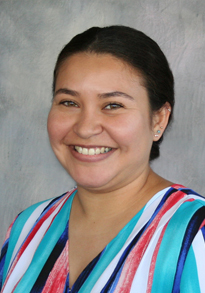
“Developing flexible yet pragmatic and robust statistical methodology that can accommodate the intricacies of real-world circumstances is paramount in addressing public health concerns.”
Maricela Cruz, PhD
Associate Biostatistics Investigator, Kaiser Permanente Washington Health Research Institute
Affiliate Assistant Professor of Biostatistics, University of Washington
Maricela.F.Cruz@kp.org
206-287-2878
LinkedIn
Biography
Maricela Cruz, PhD, is a biostatistician passionate about conducting public health research with a specific focus on improving the health of disenfranchised communities.
Dr. Cruz’s research centers on developing flexible and robust statistical methods to evaluate health care interventions, particularly using electronic health records, to inform clinical and public health practices. She specializes in analytic methods for pre-post longitudinal correlated data, including interrupted time series (ITS), time series analysis, longitudinal data, change-point detection, and difference-in-differences. Dr. Cruz additionally has experience in developing and evaluating prediction models. The pre-post methods she develops allow health systems to evaluate interventions over time, while her prediction model work helps identify at-risk encounters — both are critical in shaping effective health practices.
Dr. Cruz has developed and evaluated several ITS models to estimate the impact of new nursing structures (and similar health care interventions) on patient experience outcomes in the presence of potentially lagged (or anticipatory) treatment effects. To communicate and encourage access to her methods in the broader public health community, Dr. Cruz co-created the Robust Interrupted Time Series toolbox (https://biostatistics-kaust.github.io/robust_time_series_toolbox/), a stand-alone, user-friendly application implementing the Robust Multiple ITS model that Dr. Cruz developed in 2019 for single and multiple ITS.
Dr. Cruz provides statistical and scientific leadership in collaborative public health and health care delivery projects aimed at improving health outcomes for disenfranchised communities. She collaborates on several projects aiming to improve care for people with a history of suicide ideation and on projects designing and evaluating health care interventions, such as value-based drug formularies and clinical decision support systems for at-risk encounters.
Dr. Cruz obtained her PhD in statistics from the University of California Irvine in 2019. She is an affiliate assistant professor in biostatistics at the University of Washington.
RESEARCH INTERESTS AND EXPERIENCE
Recent Publications
Cruz M, Drewnowski A, Bobb JF, Hurvitz PM, Vernez Moudon A, Cook A, Mooney SJ, Buszkiewicz JH, Lozano P, Rosenberg DE, Kapos F, Theis MK, Anau J, Arterburn D Differences in weight gain following residential relocation in the Moving to Health (M2H) Study 2022 Sep;33(5):747-755. doi: 10.1097/EDE.0000000000001505. Epub 2022-05-20. PubMed
Cruz M, Shortreed SM, Richards JE, Coley RY, Yarborough BJ, Walker RL, Johnson E, Ahmedani BK, Rossom R, Coleman KJ, Boggs JM, Beck AL, Simon GE Machine Learning Prediction of Suicide Risk Does Not Identify Patients Without Traditional Risk Factors 2022 Aug 31;83(5). doi: 10.4088/JCP.21m14178. Epub 2022-08-31. PubMed
Buszkiewicz JH, Bobb JF, Kapos F, Hurvitz PM, Arterburn D, Moudon AV, Cook A, Mooney SJ, Cruz M, Gupta S, Lozano P, Rosenberg DE, Theis MK, Anau J, Drewnowski A Differential associations of the built environment on weight gain by sex and race/ethnicity but not age 2021 Dec;45(12):2648-2656. doi: 10.1038/s41366-021-00937-9. Epub 2021-08-27. PubMed
Bender M, Williams M, Cruz MF, Rubinson C A study protocol to evaluate the implementation and effectiveness of the Clinical Nurse Leader Care Model in improving quality and safety outcomes 2021 Nov;8(6):3688-3696. doi: 10.1002/nop2.910. Epub 2021-05-03. PubMed
Coley RY, Walker RL, Cruz M, Simon GE, Shortreed SM Clinical risk prediction models and informative cluster size: Assessing the performance of a suicide risk prediction algorithm 2021 Oct;63(7):1375-1388. doi: 10.1002/bimj.202000199. Epub 2021-05-24. PubMed

Research

Suicide attempts decreased after adding suicide care to primary care
Safety planning and risk screening improved outcomes for adult patients.
Research

Neighborhood density connected to changes in body mass index for children
Study uses geographic data to track change over time.
KPWHRI in the media
Addressing structural racism in clinical prediction models
How structural racism is impacting clinical prediction models
JSM TV, Aug. 6, 2024