Preventive Medicine

“We want to help people stay healthy and prevent illness, so we’re seeking the best evidence and testing innovative new ways to make screening and health promotion part of everyday clinical practice.”
Nora Henrikson, PhD, MPH
Assistant Investigator, Kaiser Permanente Washington Health Research Institute
Research overview
Research is often lauded for finding life-saving treatments for diseases like cancer or diabetes. But consider the impact of preventing such illnesses from developing in the first place. It’s hard to describe the value of stopping illness or injury from happening. Yet that’s the goal of research on preventive care.
Most Kaiser Permanente Washington scientists study prevention, whether their work focuses on promoting health by influencing individual behavior, building sound prevention services into everyday clinical care, designing smart health coverage, or all three. By conducting their research at Kaiser Permanente Washington—which combines care and coverage—our researchers have access to data from a large, stable population over time, allowing them to discover which approaches to prevention work best.
Examples include research in areas such as:
Evidence-based practice reviews
A team of researchers at Kaiser Permanente Washington Health Research Institute (KPWHRI) produces reviews of scientific evidence that policymakers at the Centers for Medicare & Medicaid Services and the U.S. Preventive Services Task Force and others use in health care decision-making. We do this work as part of the Kaiser Permanente Research Affiliates Evidence-based Practice Center, one of 13 centers nationwide that are sponsored by the federal Agency for Healthcare Research and Quality.
Immunization
We’re improving the safety and effectiveness of vaccines through clinical trials, and we’re monitoring how well each year’s new flu vaccines are working. In addition, we’re studying ways to better inform parents about the benefits and potential harms of childhood vaccines, to improve their uptake.
Drug safety
We’re working on several fronts to help ensure the safety of prescription drugs and other medical treatments. For example, we play a leading role in the Food and Drug Administration’s Sentinel program to monitor the safety of medical products through routinely collected electronic health care data. We’re exploring ways to improve the safety of prescribing opioid pain medications. And we often study the safety of drugs commonly used to prevent chronic conditions like heart disease, cancer, and depression.
Screening
Prevention also includes screening to detect disease before symptoms appear, to identify and treat disease at an earlier stage. Our research is improving the effectiveness of cancer screening programs so people get the appropriate tests when needed based on their particular risks. Our research is also aimed at improving clinical screening for behavioral risks such as smoking, suicidal thoughts, alcohol use disorders, and poor eating and exercise habits.
Health promotion
Our research in areas such as smoking cessation, healthy diet, and chronic illness care finds new ways to encourage individuals to adopt and maintain healthier lifestyles. At the same time, we’re exploring ways to reach large populations through the use of phone-based programs, websites, and mobile technologies.
Recent publications on Addictions
McClure JB, Lapham G Tobacco quitline engagement and outcomes among primary care patients reporting use of tobacco or dual tobacco and cannabis: An observational study 2020 Dec 3;42(4):417-422. doi: 10.1080/08897077.2020.1846665. Epub 2020-12-03. PubMed
Moore SK, Saunders EC, Hichborn E, McLeman B, Meier A, Young R, Nesin N, Farkas S, Hamilton L, Marsch LA, Gardner T, McNeely J. Early implementation of screening for substance use in rural primary care: a rapid analytic study. Subst Abus. 2020 Dec 2:1-14. doi: 10.1080/08897077.2020.1827125. Online ahead of print. PubMed
Chen JA, Glass JE, Bensley KMK, Goldberg SB, Lehavot K, Williams EC Racial/ethnic and gender differences in receipt of brief intervention among patients with unhealthy alcohol use in the U.S. Veterans Health Administration 2020 Dec;119:108078. doi: 10.1016/j.jsat.2020.108078. Epub 2020-07-15. PubMed
Maciejewski ML, Smith VA, Berkowitz TSZ, Arterburn DE, Mitchell JE, Olsen MK, Liu CF, Livingston EH, Funk LM, Adeyemo A, Bradley KA Association of Bariatric Surgical Procedures With Changes in Unhealthy Alcohol Use Among US Veterans 2020 Dec;3(12):e2028117. doi: 10.1001/jamanetworkopen.2020.28117. Epub 2020-12-01. PubMed
Cerda M, Krawczyk N, Hamilton L, Rudolph K, Friedman S, Keyes KM. A critical review of the social and behavioral contributions to the opioid overdose crisis. Annu Rev Public Health.[Epub 2020 Nov 30]. doi: 10.1146/annurev-publhealth-090419-102727. PubMed
Researchers in Addictions
 Julie Angerhofer, PhD, MPHAssociate Investigator |
 Jennifer F. Bobb, PhDSenior Biostatistics Investigator |
 Katharine A. Bradley, MD, MPHSenior Investigator |
 Clarissa Hsu, PhDAssociate Investigator |
 Noorie Hyun, PhDAssociate Biostatistics Investigator |
 Morgan Justice, PhD, MASenior Collaborative Scientist |
 Gwen Lapham, PhD, MPH, MSWAssociate Investigator |
 Theresa E. Matson, PhD, MPHCollaborative Scientist |
 Jess Mogk, MPHCollaborative Scientist |
 Yu-Ru Su, PhDAssociate Biostatistics Investigator |
 Paige D. Wartko, PhD, MPHSenior Collaborative Scientist |

Research

Mailed HPV test kits are cost-effective for screening
Study provides economic rationale for health systems to adopt mailed kits for cervical cancer screening.
Healthy Findings Blog

Meet KPWHRI’s collaborative scientists
The division contributes to research across the institute with methodological and subject matter expertise.
Healthy findings blog

How do you make sense of a mountain of evidence?
KPWHRI researchers answer questions about systematic reviews and their impact on health care guidelines.
healthy findings blog

Stopping violence: What can health care do right now?
Dr. David Grossman, with Dr. Bechara Choucair, has ideas for reducing harm to patients and the workforce
Research findings
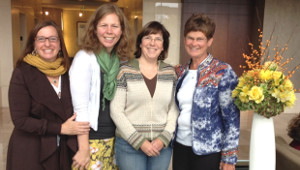
Using breast MRI after cancer may lead to unneeded biopsies
A Kaiser Permanente-led BCSC study is among the largest to evaluate adding MRI surveillance for breast cancer survivors.
healthy findings blog
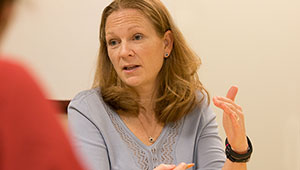
What to expect after a screening breast MRI vs. mammography alone
Diana Buist and BCSC find screening MRI leads to more biopsies, finding fewer cancers, regardless of personal history of breast cancer: JAMA Internal Medicine.
suicide prevention

To prevent gun suicides, new study seeks to improve primary care intervention
Julie Richards’ research project is one of the first three funded by Kaiser Permanente’s Firearm Injury Prevention Task Force.
Read more in Recent News.
Healthy Findings Blog

Breast screening reminders: One size does not fit all
Results from a new paper suggest the importance of tailoring preventive health outreach, writes Kaiser Permanente's Susan Carol Bradford.